
Olympia Looping
The world's largest transportable roller coaster
Operator: Barth Schaustellerbetriebe · since 1989
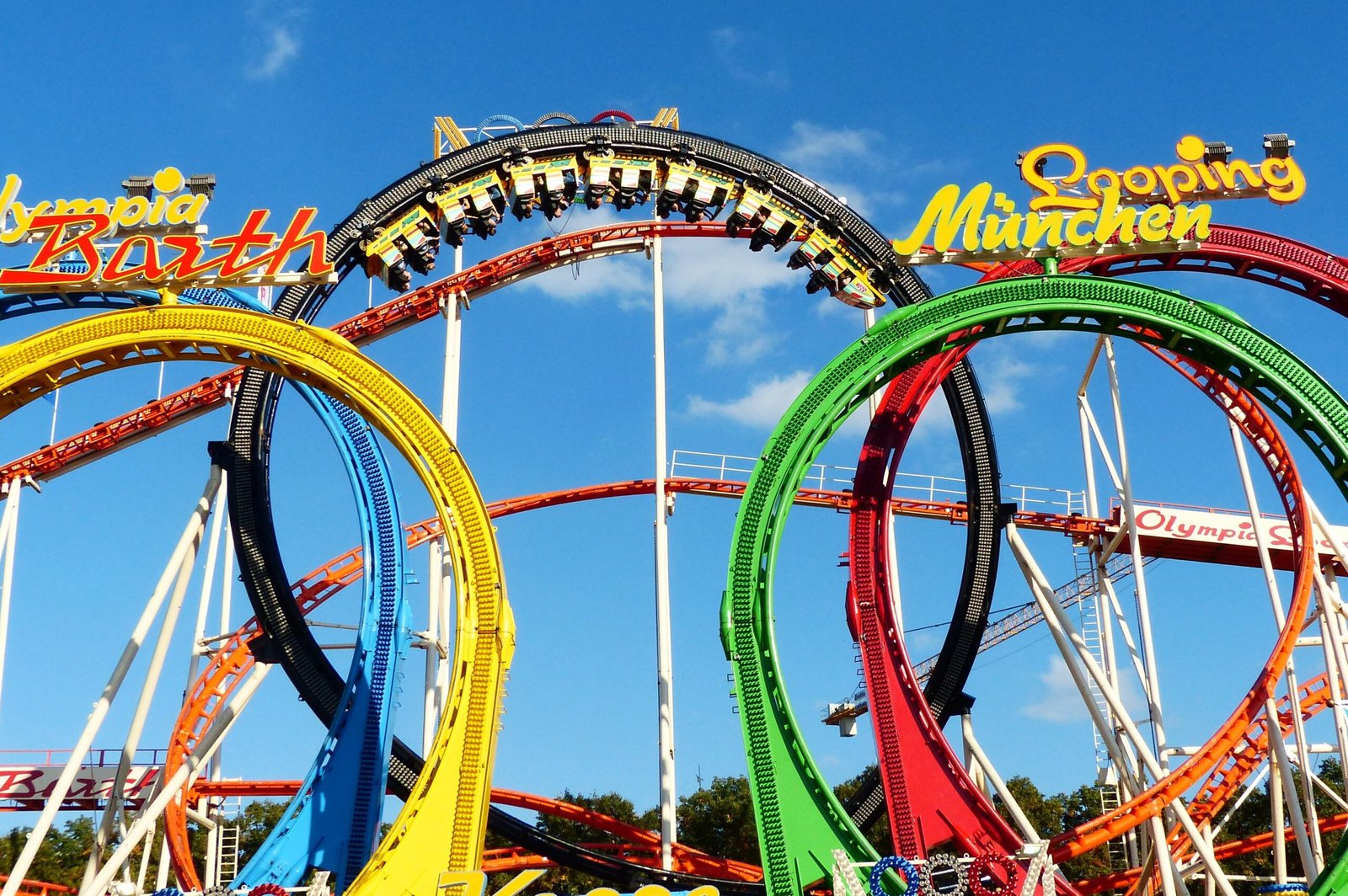
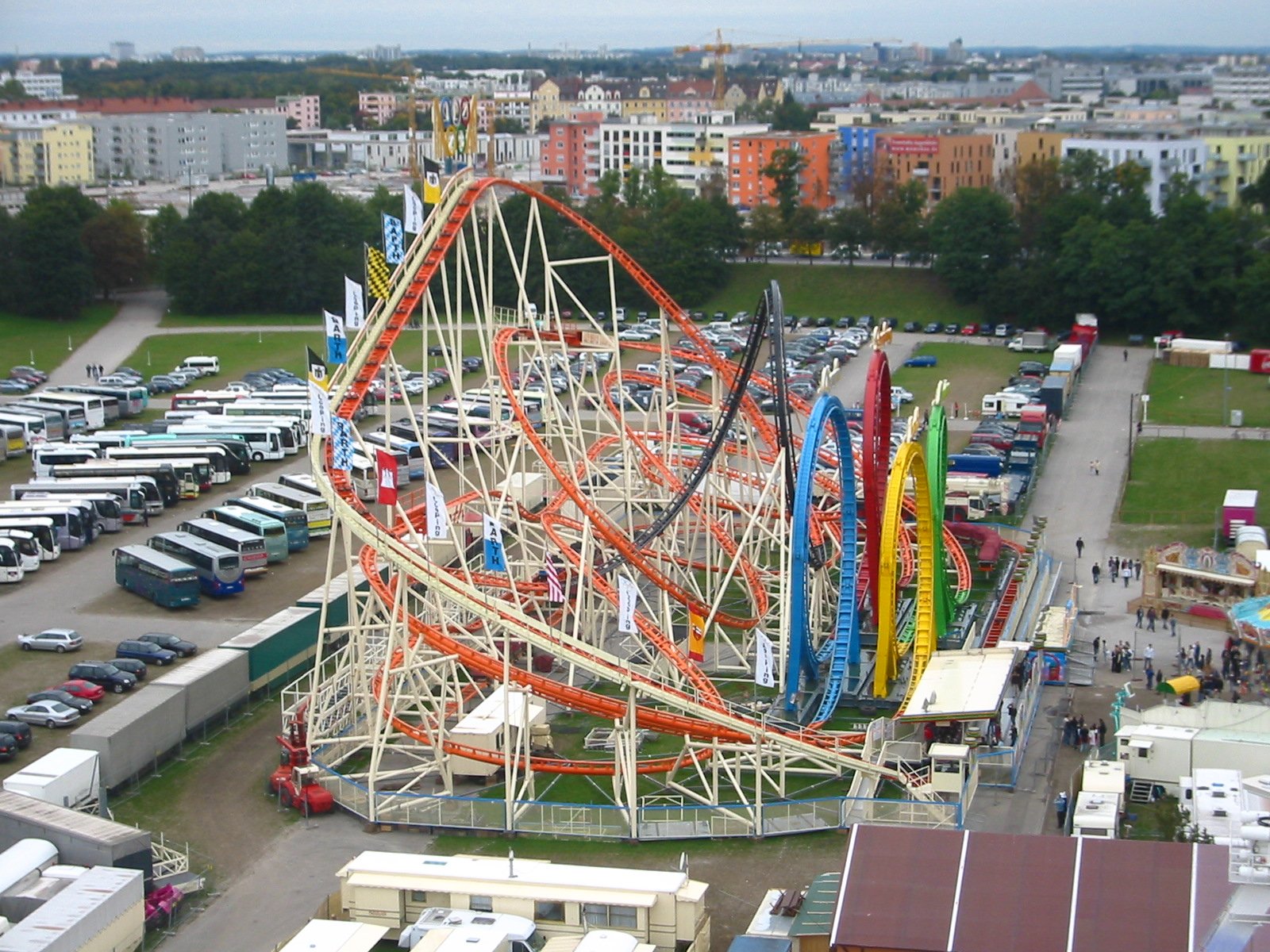
Olympia Looping is the world's largest transportable roller coaster. Since 1989, it has been a fixture at Munich's Oktoberfest. Its five loops, arranged like the Olympic rings, make it instantly recognisable. The trains also race along the 1.250-metre track at speeds of up to 90 km/h. The Munich-based Barth showman family runs the ride.



Learn more – pick a topic:
What to expect
- Loops / inversions
- Light show / LED facade
- One of a kind
- Record-breaking ride
Highlights & records
World's largest transportable roller coaster (by track length) and the first transportable roller coaster with five loops. Loop diameters: 20, 14 and 12 m; maximum gradient 52°; total weight approx. 900 t. Design: Stengel Engineering (Werner Stengel). 7-car trains only at Oktoberfest and Winter Wonderland London; otherwise 5 cars.
Five loops arranged like the Olympic rings: since 1989, this ride has been a highlight of every Wiesn.
What it's like to ride Olympia Looping
First, a tyre drive slowly pulls your train up the lift hill. From the top, you get a sweeping view of the entire fairground. Then you plunge steeply down, reaching speeds of up to 90 km/h within seconds. The five loops follow in quick succession. In between, there are tight turns and rapid changes of direction.
In the loops, forces of up to 5,2 G press you into your seat. That's significantly more than on most roller coasters at theme parks. Even so, the ride is considered surprisingly smooth because the track has been designed to flow very smoothly. Several trains also run at the same time. As a result, the queue moves quickly even on busy days.
Video
General
- Manufacturer
- BHS (Bavarian Mining, Iron and Salt Works)
- Year built
- 1989
- Premiere
- 1989
Ride
- Track length
- 1,250 m
- Height
- 32.5 m
- Speed
- 90 km/h
- Max. g-force
- 5.2 G
- Inversions
- 5
- Ride time
- 2:20 min
- Lift / drive
- Tyre / friction wheel drive
Vehicles & capacity
- Trains
- 5
- Cars per train
- 7
- Riders per car
- 4
- Capacity
- 3,000 riders/h
- Restraint
- Lap bar
Set-up & transport
- Footprint
- 86.5 × 38.5 m
History of Olympia Looping
Olympia Looping was designed by two legends of roller coaster design: Anton Schwarzkopf and Werner Stengel's engineering firm. The ride made its debut at Oktoberfest on 17 September 1989. It then became the largest travelling roller coaster, replacing Alpina Bahn. This ride was also designed by Schwarzkopf and Stengel.
Since then, the ride has been at Wiesn every year. It also travels to major fairs across Europe. Since 2016, for example, it has operated in winter as “Munich Looping” at Winter Wonderland in London's Hyde Park. Each time, the crew dismantles the approximately 900-tonne ride into numerous individual parts for transport.
Timeline
Built at the BHS plant in Peißenberg for showman Rudolf Barth. Debuted at Oktoberfest Munich in 1989. From 2016, spent seasons at Vienna's Prater, returning to Oktoberfest each time. 2018 LED lighting, 2019 permanent-magnet brake. 2026 returned to Hamburger Dom after 14 years.
- Operator
- Barth showman businesses
- With operator since
- 1989
- Type of operation
- Travelling
- Status
- Active / in operation
- Last known season
- 2026
Who is this roller coaster suitable for?
Olympia Looping is a full-on thrill ride. You should be comfortable with heights and enjoy going upside down. You must also be at least 1,30 metres tall to ride. If you prefer something gentler, see our overview of roller coasters, which also includes rides without loops. For more rides that turn you upside down, see looping roller coasters..
Good to know
- Restraint
- Lap bar
Upcoming funfair dates
Ride Olympia Looping live
Sources: olympialooping.de (Schaustellerbetrieb Barth), muenchen.de and Wikipedia, accessed on 22 October 2026.